Showing posts with label tips. Show all posts

Tuesday, January 4, 2011

Meal Planning

The Illinois group was recently chatting about meal planning. Specifically, that if we were better at it, we could clear out our freezers and make room for cooking together more often! So I said I'd put together a little post about how I do my meal planning.

Meal planning is important if you do much freezer cooking because it does no good to have a meal in the freezer if you didn't plan to let it thaw the appropriate amount of time before cooking.

First, I make an inventory of everything in both of my freezers (the one attached to my fridge and the small chest freezer in the garage), right down to the number of sticks of butter, or half a bag of frozen peas. I make two copies of this list.

Then, I sit down and think of a list of meals I can make with those items, and cross ingredients off one inventory as I've "used" them for meals.

Third, I add the meals to my calendar. For this I usually use a blank calendar template from Microsoft that has a full month per page (this is the one I just downloaded for 2011)*. While doing this, I make sure to note days we will be out of town or will otherwise not be eating at home. I usually leave at least one night a week (Friday!) where I don't plan a meal so we can either eat leftovers or else go out. I print out one month at a time and keep the calendar on the fridge for easy access.

Most importantly, I print out the second copy of my freezer inventory and put that on the fridge as well. We cross off ingredients or meals as we use them throughout the month. Somehow, I never remember to add items I put into the freezer as I grocery shop so I always end up making a new inventory from scratch next time I want to plan meals.

Not all meals on the calendar are freezer meals. I put a note under the meal of any items that I will need from the grocery store, such as fresh buns to go with the sloppy joes in the freezer.

Some people only like to plan a week at a time (perhaps to take advantage of sale ads), but for me it's hard to remember to do it every week so a month works better. This actually works great with our group because I know what we'll be making and I can schedule those meals in my month before they are actually in my freezer!

Alright, now that I've typed all this up, I suppose I should actually go DO THIS for my household (and my sanity)!

Leave a comment: Do you do meal planning? What do you do differently? What tips can you share?


*I've tried scheduling meals into my online Google calendar but it never seems to work as well as having a printout on the fridge. I thought I'd mention it in case it works for someone else.

Tuesday, April 28, 2009

Prep for May cooking day

Ingredients needed:

for the Black Bean Burritos-
we are making one recipe which will yield 9 burritos per family

black beans, 3 1/2 pounds dried* or 13 pounds canned
(olive oil)
onions, medium, 7, finely chopped**
garlic, fresh, pressed, 2T + 1t
canned, diced tomatoes, 7 pounds
jalapeno peppers, 7
chili powder, 2T + 1t
cumin, ground, 2T + 1t
(oregano, dried, 2T + 1t)
lemons, 3 fresh*
(salt)
mild salsa, 48 ounces (I removed this so each family could buy their preferred type)
Montery Jack cheese, shredded, 6 cups
flour tortillas, 10-inch, 36

:::

for the French Toast-

we will make 2 loaves of bread per family

bread, 8 loaves
eggs, 5 dozen
milk, 2 cups?
vanilla

:::

for the Stuffed Cabbage Rolls-
we will make the meat filling, buying/making the cabbage and the sauce ingredients will be up to each family

kosher salt
ground beef, 7 pounds
rice, converted, cooked, 4 cups*
sour cream, 1 cup
(butter, unsalted, 8 T (1 stick))
onion, medium, 1, finely chopped**
garlic, 3 cloves minced
sweet paprika, 4 t
allspice, ground, 1 t

:::

for the Monica's BBQ Chicken
we will make the sauce only (two bags per family) for the family to add to their own chicken

soy sauce, 2 cups
brown sugar, 3 cups
(oil, 8 T)
(ginger, ground, 4 T)
(pepper, ground)
garlic, 8 cloves pressed

:::

for the Lemonade Chicken
we will make the sauce only (two bags per family) for the family to add to their own chicken

frozen lemonade concentrate, 24 ounces (2 cans)
(oil, 4 T)
(ketchup, 12 T)
(vinegar, 1T)
brown sugar, 12 T
(cornstarch)***


*prep the night before
**given our group's thoughts on onions, Jodi will purchase and prep ahead 3-4 medium onions to use in all of our recipes this month.
***this is added after cooking
(items in parentheses are in our inventory and do not need to be purchased)

The grocery list can be found here and as a link on the sidebar under "Tools."

Tuesday, April 7, 2009

Group Freezer Cooking - Host Kitchen

Since I am always the one who offers my home as the host home, I have a few tips for preparing so that everything is ready for Cooking Day.

I should also say here that it's not that anyone else doesn't want to host, this just works out well for our group and our circumstances. I have the youngest child (so far) and it makes it easier for naps and such for me to cook in my own home. I have a kitchen with, perhaps, not alot of counter space, but it does have alot of open space and room for tables (we use three!) so we can spread out while cooking.

One thing I always try to do is be available the day before cooking day so the grocery shopper can come and unload the groceries into my fridge. This works well so that there's only one unloading of food and in the morning on cooking day, everything is ready to go. It also gives us a chance to double check against the grocery list and make sure we have everything.

The shopper and I will usually go over the recipes one more time to determine what, if anything, can be done ahead of time to make cooking day go smoother. We can split up the items at this point. For example, in March I precooked the noodles for the Mac & Cheese and Jodi took home the peanuts to chop up for the Creamy Peanut Chicken.

Either the night before, or the morning of cooking day, I print a copy of each recipe and put it in a plastic page protector. I also type up labels that have the name, date, and reheating instructions for each meal and print these out as well.

The plastic page protectors are stored in our pantry bin so now is a good time to bring this out as well (it lives in my guest bedroom the rest of the month!)

It's nice to have everything in one place when we start cooking so I bring up from the basement my extra large Tupperware bowls that I don't use everyday and get out other items from my cabinets that I'm pretty sure we'll use.

I don't mind at all when these ladies go into my cabinets or drawers (and if you're hosting a cooking session, you should expect this!) but it's just easier to have them available on counters and tables.

My kitchen doesn't have a huge amount of counter space so I get out a card table for an extra work surface. This, in addition to my two kitchen tables (one acts like an island for me) is generally enough room for 4 of us to work.

I also make sure my dish draining rack is empty, there is a new clean bag in my garbage can, that there is dish soap in the dispenser and that there are plenty of clean towels around for drying hands and dishes (we go through at least 6 every cooking day).

This is all in addition to making sure my house is picked up as I would before any company comes over and making sure the kids have a safe place to play and toys to occupy themselves with.

It may seem like alot of work but it's not that bad. It was worse when I had people asking for items and I had to run around to get them instead of working on making a meal. I would much rather take some time the night before to ensure everything runs well on cooking day.


See also: Group Freezer Cooking - Planning; Group Freezer Cooking - Cooking Day

Monday, April 6, 2009

Group Freezer Cooking - Cooking Day

Welcome to second in a series about how we make our freezer cooking group work: Cooking Day! To see what to do to prepare for this day, see Group Freezer Cooking - Planning.

When cooking day arrives, one of the most important things is that all the cooks try to arrive on time. It is also important that the house we're cooking at is prepared to handle it! (I'll write more on this later).

We print out each of the recipes on a full sheet of paper (so it's harder to misplace) and put it in one of those plastic page protectors (so spills wipe up easily). Quickly scan the recipes to see what needs to get started right away. Anything that needs to be baked and cooled should be started early so it can rest while other things are being made.

We usually give each mom one recipe to work on, start to finish, and making all the batches of that recipe. This is more efficient than having each person make one of each recipe. Whomever gets finished or has some waiting time in their recipe helps out someone who needs it.

During cooking, we periodically check with each other to personalize the dishes. Who wants extra onions, no mustard, food allergies, etc. Sometimes a mom with a smaller family will want a meal separated into two bags so there aren't so many leftovers. As we continue cooking with the same ladies, we can pretty much guess who's going to want what, but it never hurts to ask. Other than that, we're constantly chit chatting which makes the time go by faster, plus, it's fun!

As each meal is made, it gets put either into a casserole dish that each mom is responsible for bringing or into freezer zipper bags. Then it gets labeled with the recipe name and date. Tristy had the wonderful idea to print up address labels with cooking instructions and stick them right to the bags! Now we don't have to try to find the original recipe for reheating instructions. This also make it easier for someone else to pull the bag out of the freezer and make dinner (as if that would ever happen!). Finished meals are kept in the fridge or freezer until we're done.

Dirty dishes get washed as we have time during the cooking day, but definitely when we're all done. No fair leaving the host home with a huge pile of dirty dishes to clean up (and I don't say that only because I'm always the host home!)

Finally, our bin of pantry items is packed back up for storage until next time. If we have time, and the kids aren't too cranky, we like to plan the next month's menu at the end of our cooking session. It's easier to do when we're all together. But sometimes we have no choice but to do it via email over the next couple weeks.

We also take time to settle up with payments. We pre-pay the grocery shopper about $30 each depending on the recipes for the month. We just use a calculator or simple spreadsheet (this link can also be found in our sidebar under Tools) to determine if we still owe more to the shopper or if we get a refund (we love to get a refund!).

For us, we think we've done well if everyone is on their way home by noon. Since we start at 9, that's 3 hours of cooking.

That's it! That's a cooking day.


See also: Group Freezer Cooking - Planning; Group Freezer Cooking - Host Kitchen

Friday, April 3, 2009

Group Freezer Cooking - Planning

There are many ways to do group freezer cooking. I will describe how we run our group and maybe (if mom duties don't interfere too much) I will give some other options.

There is alot that needs to happen before everyone shows up on my door step on cooking day! The first and most obvious thing is we need to decide is a date and time to cook. Luckily for us, we are all stay at home moms so we can do this during the week when the older kids are in school, the husbands are at work and we don't use up precious weekend family time.

Next we need to decide on a menu, how many and what types of meals to prepare. We all offer up suggestions based on meals we have successfully frozen for our own families and recipes we've come across that look promising. The internet is a great source of freezer recipes!

After several months of freezer cooking with the same women, we've determined a good formula is one dish per mom. Four moms means four meals for each family. This is mainly due to time restrictions. We only have so much time before the babies/toddlers/preschoolers that are with us start melting down and needing meals/naps/attention.

We also try to find a good mix of recipes. We like to make one breakfast dish and then we just make sure the others are varied- one pork, one chicken, one casserole, etc. We don't want to end up having 4 different forms of beef in our freezer!

Then we need to check each recipe for preparation instructions. If all the recipes need "stove time" (such as pasta that needs to be boiled, veggies sauteed, meat browned, etc) we may have a problem since I only have one stove! Sometimes, though, these types of things are the first step in the recipe and someone can volunteer to do some prep work the night before.

Other prep work that can be done the night before is cleaning and chopping veggies or shredding cheese. Often, the person who does the grocery shopping will offer to do it since she already has the groceries.

Speaking of groceries- that is another process that must be decided. It works out best for us to have one person do the majority of the shopping, usually the day before cooking day. I try to make myself available that day so the shopper can come directly to my house to drop off the food. This way we only need to unload the bags/cooler once and we can double check to see if something is missing before cooking day. The grocery shopper rotates in our group, although I try not to volunteer because I'm doing other things to get my house and kitchen ready the day before cooking day. (More on this to come)

Before grocery shopping can be done, we need a shopping list. I am usually the one who makes it up, but not for any special reason. I look over the recipes, double or quadruple them as needed and make a list of ingredients. I make sure we don't have something in our pantry bin before I add it to the list. I also check our supplies of zipper freezer bags, aluminum foil, etc and add those items to the list as necessary.

After all this prep work, cooking day is sure to go smoothly!


See also: Group Freezer Cooking - Cooking Day; Group Freezer Cooking - Host Kitchen

Monday, March 30, 2009

Cost Splitting Worksheet

Cooking Day is tomorrow! Since several of us bought groceries this time, I needed to put together a quick worksheet so we could easily see who owed money, how much, and to whom. Enter Google Documents:


This works best if one person does the majority of the shopping.

You can see the worksheet here. If you would like an editable copy to use for yourself, just contact us!

Thursday, March 5, 2009

Prep ahead to make lunch easy

Making meals ahead doesn't have to be a complicated, cook all morning with your friends endeavor. Earlier this week, I made my son a PB&J for lunch. Since I already had all the stuff out, I went ahead and made three extra sandwiches. I used this tool from Pampered Chef to make them pretty. I made half sandwiches since I'm never sure how much he will eat. I can always take another one out.

Then into a sandwich bag and in the freezer for a quick and easy lunch another day. If you forget to take it out in the morning to thaw (it only needs a couple hours and leave it in a bag so it doesn't dry out) you can even throw it in the microwave for a few seconds. Easy!

Thursday, February 26, 2009

Breakfast ideas

French toast, waffles and pancakes, made from scratch at home, can be frozen! They're just as fast to reheat in the morning as the prepackaged ones in the store. Only they cost less and are better for you!

Use your favorite recipe. You can even use a boxed mix for the pancakes and waffles (although it is almost as quick and cheaper to make up the mix yourself).

Make a double batch the next time you make one of these on the weekend. Put whatever is left in a single layer on a cookie sheet and freeze until solid. Once frozen, you can transfer to a gallon freezer bag for long-term storage.

Do not thaw these before reheating! Toaster, microwave, oven, or toaster oven all work fine for reheating.

Photobucket

Preparing pasta for freezing

When a dish will be frozen and then heated again in the oven, you don't want your pasta to be overcooked and mushy by the time it's ready to eat.

When you first cook the pasta, boil it for about half the time recommended on the box, or about 7 minutes or so. Then drain the pasta and run it under cold water. This will stop the cooking process.

Don't worry! The pasta will absorb some of the moisture from the dish and finish cooking when you reheat it.

Monday, February 23, 2009

Shredded Chicken for recipes

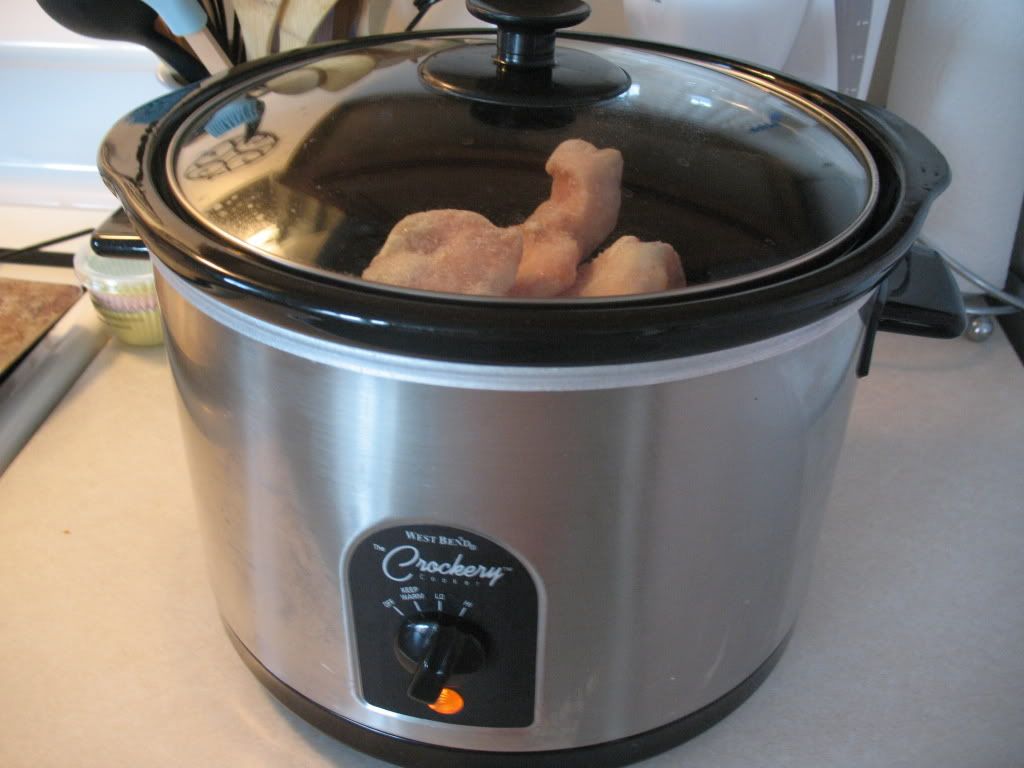
When the big bags of frozen boneless, skinless chicken breasts go on sale, I buy as many as I can. When I get home, I open a bag and throw the whole thing in the slow cooker on low for the rest of the day. After it has cooked at least 6 hours, just pull the chicken apart using two forks or your (clean) fingers.

You can use it in a recipe right away, or let it cool and bag it up into portions you will need for recipes later. The works great for any dish that uses shredded or diced chicken, including Bankok Chicken, Chicken Enchiladas, etc. Add some taco seasoning and a little water and you have a great taco filling. Add barbeque sauce and you're halfway to quick sandwiches.

Crock Pot Chicken


Crock Pot Shredded Chicken

Friday, February 20, 2009

How to Reduce Your Monthly Grocery Bill

Most people spend an outrageous amount of money on groceries each month. You can enjoy significant savings by putting in a little time and planning and following the five simple steps below.

The first step is to develop a budget. You will need to track your grocery receipts for a month, and then review them to see how much you spend and what you are purchasing. This will allow you to determine what your budget should be going forward and decide if there are certain items you can eliminate from your shopping list completely.

The second step to reducing your grocery spending is to get organized. Take an afternoon to arrange your pantry by placing like items together; for example, place all baking items on one shelf and all rice and pastas on another. This allows you to see at a glance what you have stocked and prevents repeat purchase of items on your subsequent shopping trips. Next, clean out your refrigerator and freezer. Get rid of any spoiled food and, again, place like items together. Having a clean and organized refrigerator will make certain that you use up fresh ingredients and leftovers before they go bad. Also, keep a dated list of what’s in your freezer. When something is eaten, simply cross it off the list and never again worry about tossing forgotten-about, freezer-burned foods.

Preparing menu plans is the third step. This can be done weekly or monthly. A menu plan allows you to arrange for use of ingredients on hand, eliminates the scramble of last minute dinner prep, and prevents extra shopping trips for missing ingredients. It will also decrease the number of times you run through the drive thru instead of preparing your own dinner.

The fourth step to take when trying to reduce your grocery bill is to cook from scratch. Purchasing convenience foods, like packaged cookies, dinner kits, and deli counter fare will escalate you grocery bill quickly. Prepare your own dry mixes and store in labeled zipper seal bags with cooking instructions. By preparing your own dry mixes for items like cookies, cakes, breads, rice & dips you will make your dollar stretch further than if you purchase the convenience counterparts. Also, don’t forget to utilize your freezer. Taking one day a month to pre-cook freezable meals allows you to buy in bulk, which can save a lot of money, especially in the meat department.

The last step to reducing your monthly grocery bill is to spruce up your shopping habits. Never shop without a grocery list. Walking into a store without a plan sets you up to purchase a majority of convenience foods, increases the chance of forgetting important ingredients and multiplies the opportunity for impulse buys. Always be conscious of your impulse buying habits as when you are aware of your habits you can nip them in the bud before you cave in to your desires. Lastly, always look for sales and use coupons if you have them.


By taking the time to plan and implement the steps above you will see a significant savings in your grocery bill. Besides the financial reward, you will reward your body with a healthier diet and you will save time in the kitchen. You can’t lose when you try to save!